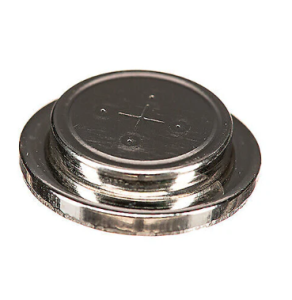
The Varta V500HT is a 500mAh rechargeable battery that quietly powers the kind of devices people only think about when they stop working — car emergency call (eCall) systems, GPS trackers, memory backup circuits, industrial control modules, and other equipment that needs reliable standby power. Like every rechargeable battery, it wears out. When it does, the symptom usually shows up as one of three things: the backup no longer holds a charge, the device won’t charge at all, or a warning light appears on a dashboard. This guide explains what the V500HT is, why its runtime drops, what to do when it won’t charge, how to tell a worn battery from a damaged one, and the real-world scenarios where a fresh 500mAh replacement matters most.
What the Varta V500HT Battery Is
The V500HT is a small rechargeable button/cell battery with a 500mAh capacity, supplying 1.2V per cell. VARTA builds it as a Ni-MH (nickel-metal hydride) chemistry, which is chosen for backup applications because it handles a wide temperature range — roughly −20°C to +85°C — stays stable in harsh automotive environments, has no memory effect, and can tolerate continuous trickle charging. The cells are small, lightweight (around 30–50g depending on the pack configuration), and are often assembled into 3/V500HT (3.6V) or 4/V500HT (4.8V) packs for use inside telematics modules.
Because it’s a Ni-MH cell, the V500HT is rated for roughly 1,000 charge and discharge cycles and is valued for a long service life — up to about ten years in the right conditions. It replaces common part numbers such as 5183454AA and 55750201501, and cross-references to cells like the V600HRT.
Why the Battery Life Feels So Short
The single most common complaint about an aging V500HT is reduced runtime. You might notice that the device discharges much faster than it used to, needs frequent recharging, or that the backup power only lasts a short time during an outage or emergency.
This is almost always normal battery aging. Every charge and discharge cycle gradually reduces the internal chemical capacity of a Ni-MH cell, so a battery that once delivered 500mAh may hold far less after several years in service. In a backup application this is easy to miss — the device runs on the main power supply most of the time, and you only discover the battery is weak when it’s suddenly needed.
High heat accelerates the decline. Telematics and automotive modules sit in environments that swing between freezing cold and extreme heat, and sustained exposure to the top of the temperature range ages cells faster than moderate conditions.
When the Battery Cannot Be Charged
Charging failure is the second major issue, and it looks different from simple aging. Typical symptoms include:
- The device does not respond when power is connected
- The charging indicator does not light up
- The battery stays at 0% or the level never increases
These point to something more serious than reduced capacity. Common causes are internal cell damage, long-term over-discharge (a backup battery left flat for too long can drop below the voltage its charger can recover), or degradation of the small protection circuit built into the pack. If a known-good charger and power source make no difference, the battery itself is the likely fault.
How to Tell If the V500HT Battery Is Damaged
Aging and damage both reduce performance, but they call for different responses. Watch for these warning signs of a genuinely damaged battery:
- The device shuts down unexpectedly even while it shows remaining battery power
- Charging takes unusually long or never completes
- The battery becomes warm during charging
- There is visible swelling or deformation of the cell or pack
- Nothing improves after trying different chargers and power sources
If any of these appear — especially swelling, warmth, or deformation — the battery has reached the end of its safe life. Stop using it and replace it immediately. A swollen Ni-MH pack can leak or rupture, and in a device mounted inside a vehicle or industrial cabinet, that’s a safety issue as well as a functional one. When in doubt, replace: the part is inexpensive, and the consequences of a failed backup battery are not.
Typical Usage Scenarios
The Varta V500HT 500mAh battery shows up in equipment where stable standby power is the whole point:
- Car eCall and T-BOX emergency systems — the backup that lets a vehicle call for help even if the main battery is disconnected in a crash. A degraded cell is a frequent cause of the “eCall” or “GPS” error light on a dashboard.
- GPS trackers and vehicle tracking units — keeping location data alive when primary power is interrupted.
- Memory backup (RTC/MBU) systems — preserving real-time clock and settings in computers, servers, and controllers.
- Industrial control modules — holding state and configuration across power cycles.
- Medical and measurement devices — where a power gap can mean lost or corrupted readings.
- Security and communication equipment — alarms, wireless beacons, and sensor networks.
- Embedded electronic systems — any design that needs reliable power between charge periods.
In all of these, a failing battery doesn’t just shorten runtime — it undermines the reliability of the device itself. That’s why replacing a worn V500HT is about restoring trust in the equipment, not just extending a number.
A good 500mAh V500HT replacement should match the original on voltage, capacity, chemistry, dimensions, and connector, and it should carry proper safety certification such as CE, RoHS, and UL. Look for built-in protection against over-charging, over-discharging, overheating, and short circuits, and choose a supplier that offers at least a twelve-month warranty.
One practical caution: these cells are often soldered or fitted inside a module, so installation may require the right tools and some skill. If you’re not comfortable with that, have it fitted professionally — a small error can damage both the battery and the device it protects.
The Varta V500HT 500mAh battery is a small component with a disproportionately important job. When it starts draining fast or refuses to charge, the cause is usually age, over-discharge, or a worn protection circuit — and swelling or overheating means it should be replaced right away. Because the V500HT is designed for rough environments and long service life, a high-quality replacement restores the stable, dependable backup power that your car, tracker, or industrial system depends on. Match the specification, fit it carefully, and your equipment will be ready the next time it actually matters.